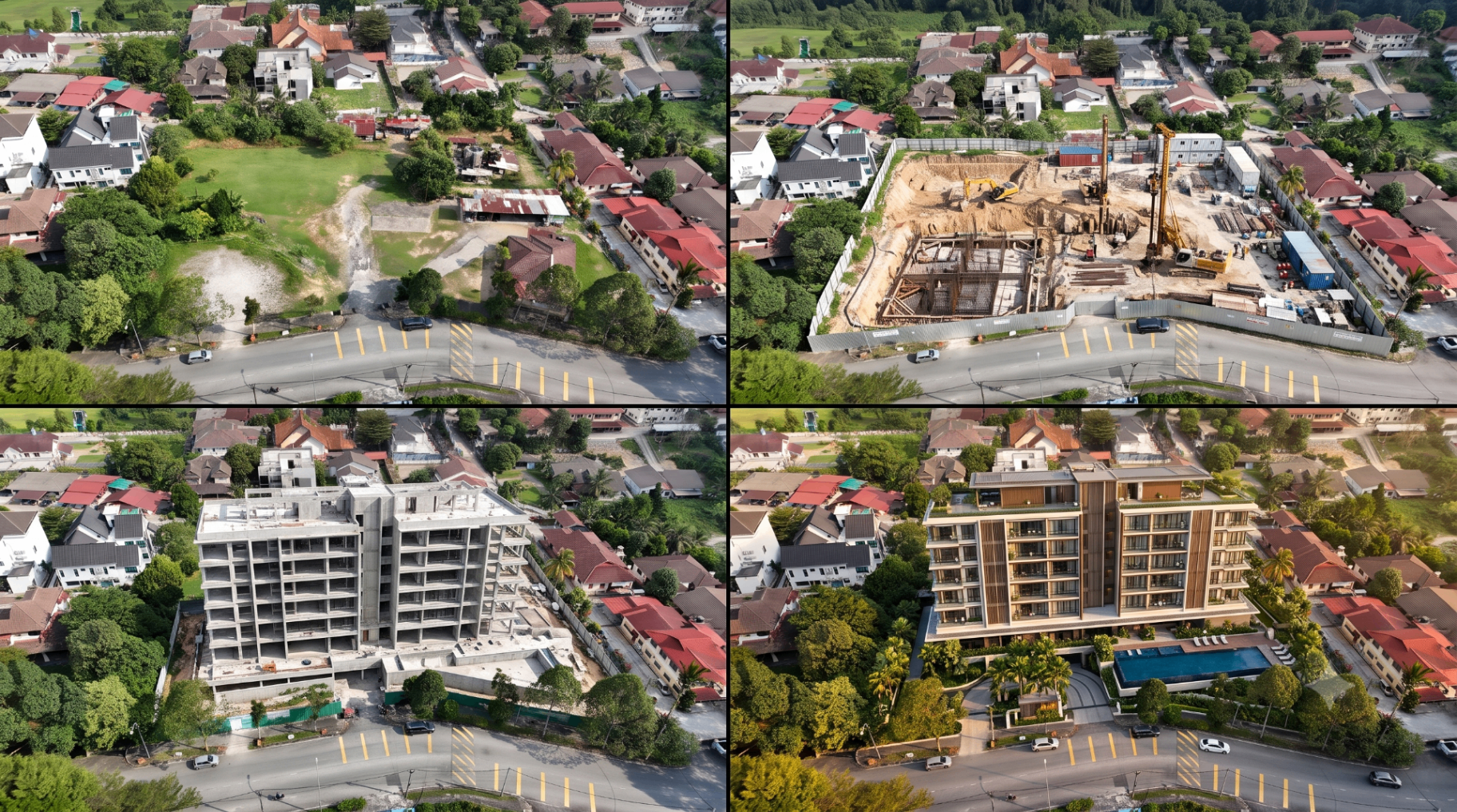
Many landowners own valuable land but may not fully understand the development potential, approval process, cost structure and risks involved.
Successful property development is not simply about buying land and building. It is a combination of:
📍 Step 1: Understanding Your Land Development Potential
Before any development decision, the first question is:
"What can this land legally become?"
🗺️ Land Use & Zoning
The approved land use under the Local Plan (Rancangan Tempatan) and title conditions determines development potential. Common categories:
🏠
Residential
🏢
Commercial
🏭
Industrial
🌱
Agriculture
Example: Agriculture land may have strong location potential, but it does not automatically allow housing, commercial or industrial development without the necessary approvals.
⚠️ Important: Land Title Conditions Must Be Respected
Every land title comes with specific conditions, including:
- Category of land use
- Express conditions
- Restrictions in interest (if any)
Example: Agriculture title used for unauthorised residential, commercial or industrial activities may create legal and enforcement issues.
Possible consequences may include:
- ❌ Enforcement action by authorities
- ❌ Penalties / compounds
- ❌ Requirement to regularise the use
- ❌ Risk of State Authority action including forfeiture/re-entry proceedings in serious cases under applicable land laws
A landowner should always verify the title status before commencing any development activity.
📑 Step 2: Land Conversion & Change of Use
When the existing land use does not match the intended development, conversion may be required. Common examples:
- 🌱 Agriculture → Residential
- 🌱 Agriculture → Commercial
- 🌱 Agriculture → Industrial
The process generally involves:
- Development feasibility study
- Planning assessment
- Submission to relevant authorities
- OSC application process
- State Authority approval (where required)
- Payment of conversion premium
- Land title update
Approval depends on:
- ✅ Local planning policy
- ✅ Surrounding development
- ✅ Infrastructure capacity
- ✅ Government planning direction
🏛️ One Stop Centre (OSC): The Key Approval Platform
Most property development applications are coordinated through the OSC (One Stop Centre) at the relevant Local Authority. The purpose of OSC is to streamline and coordinate approvals between various technical departments.
A typical OSC process involves submission and review by:
The OSC coordinates comments and technical requirements before development approval is issued.
A successful OSC submission normally requires:
- ✅ Proper planning submission
- ✅ Complete technical drawings
- ✅ Compliance with planning guidelines
- ✅ Supporting documents
- ✅ Resolution of technical comments
📐 Step 3: Understanding Development Parameters
Key development terms every landowner should understand:
Plot Ratio
Determines allowable floor area.
Example: Land area 100,000 sq ft · Plot Ratio 1:4 → Maximum built-up area 400,000 sq ft.
Density
Commonly used for residential development.
Example: 30 units per acre · 50 units per acre. Higher density may increase potential value but requires stronger infrastructure support.
Plinth Area
The percentage of land that can be physically built on.
Example: 60% plinth area means 60% of land is buildable and the balance 40% remains for roads, landscape, open space and facilities.
💰 Land Conversion Cost (Premium)
One of the biggest questions:
"How much does conversion cost?"
Conversion premium is not a fixed amount. It depends on state jurisdiction, location, existing land use, proposed land use, land size and the increase in land value.
The authority may determine premium based on the increase in land value after conversion.
Current Land Value
vs
Post-Conversion Land Value
The difference influences the premium payable.
💵 Major Development Cost Components
A developer must consider:
Land Cost
Purchase price or landowner JV arrangement
Conversion Premium
Changing land use category
Professional Fees
Architect · Engineer · Planner · Surveyor · Consultants
Authority & Infrastructure
Roads · Drainage · Utilities · Contributions
Construction Cost
Building and external works
Financing Cost
Interest · Holding cost · Loan-related expenses
🤝 Development Models
1. Sell Land
Simple exit strategy.
✅ Immediate cash · ✅ Lower risk
2. Joint Venture (JV)
Landowner contributes land. Developer contributes capital, expertise, approvals and construction capability. Returns are shared.
✅ Unlock higher land value · ✅ Reduce upfront financial burden
3. Development Partnership
Landowner participates as a development partner throughout the project.
📊 What Makes Good Development Land?
🚨 Common Mistakes Landowners Make
- ❌Assuming acreage alone determines value
- ❌Ignoring zoning and title conditions
- ❌Developing without proper approvals
- ❌Underestimating conversion premium
- ❌Not conducting feasibility studies
The same piece of land can have very different values depending on what is legally achievable.
🚀 Unlocking Land Value
The biggest opportunity in property development is not only owning land. It is understanding:
- What can be built.
- How it can be approved.
- What it will cost.
- Who can execute it.
A properly analysed piece of land can transform from a passive asset into a strategic development opportunity.
📞 Explore Your Land Potential
Do you own land and want to understand:
- ☑ Development potential
- ☑ OSC approval pathway
- ☑ Conversion requirements
- ☑ Land value enhancement
- ☑ JV / development opportunities
Contact us for a FREE consultation
Jik Wafa
PEA 2234 · Esprit Estate Agent
012-650 8411
Let's explore how your land can achieve its highest potential. 🚀